
Harvard University
Center for Nanoscale Systems (CNS)
Expertise:
NNIN users will have access to the full capabilities 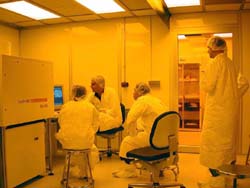 of the Harvard University Center for Nanoscale Systems (CNS) which includes capabilities in the following areas:
- A Fully Instrumented Research Cleanroom for Nanofabrication and Soft Lithography
- Electron-Beam and Optical Lithography
- Advanced Electron-Beam, Optical, and Atomic Imaging
- Materials Synthesis and Characterization
- Ion Beam Processing and Characterization
As part of the NNIN consortium, Harvard University emphasizes its the areas of 1) soft lithography and the assembly of nanoparticle and molecular electronics; 2) theoretical simulations of electron states and transport in nanoscale systems; and 3) the establishment of core computational resources to assist users in the understanding and visualization of new device structures. In addition to increased emphasis on soft lithography and molecular electronics as part of NNIN, Harvard provides a new computational facility and dedicated staff to assist users in the understanding and visualization of next generation electronic structures, and access to these programs over the web.
The approach adopted by Harvard and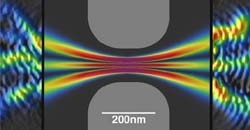 CNS to interact with external and non-traditional users is through highly trained NNIN Technical Liaisons who work with outside users of the facilities, with the guidance and support of relevant members of the Harvard faculty. The Liaisons advises users of the technical capabilities available; assist in designing a process to achieve their technical goals; and work with them from beginning-to-end to implement their project. Users, traditional and non-traditional, are individually assisted by a Liaison so that they can achieve the level of expertise necessary for the successful completion and understanding of their experiments. The Liaisons at CNS are trained by the Harvard faculty and senior members of their research groups.
For Information and Access Contact:
James Reynolds
CNS/NNIN User Program
(617)-384-7411
info@cns.fas.harvard.edu